
Flexible offices & flexible working: the future of the work landscape?
What are flexible offices? Flexible workspaces are increasingly replacing fixed desks at the office — a new phenomenon. Traditional offices with assigned desks seem more and more to be a thing of the past.
What are flexible offices?
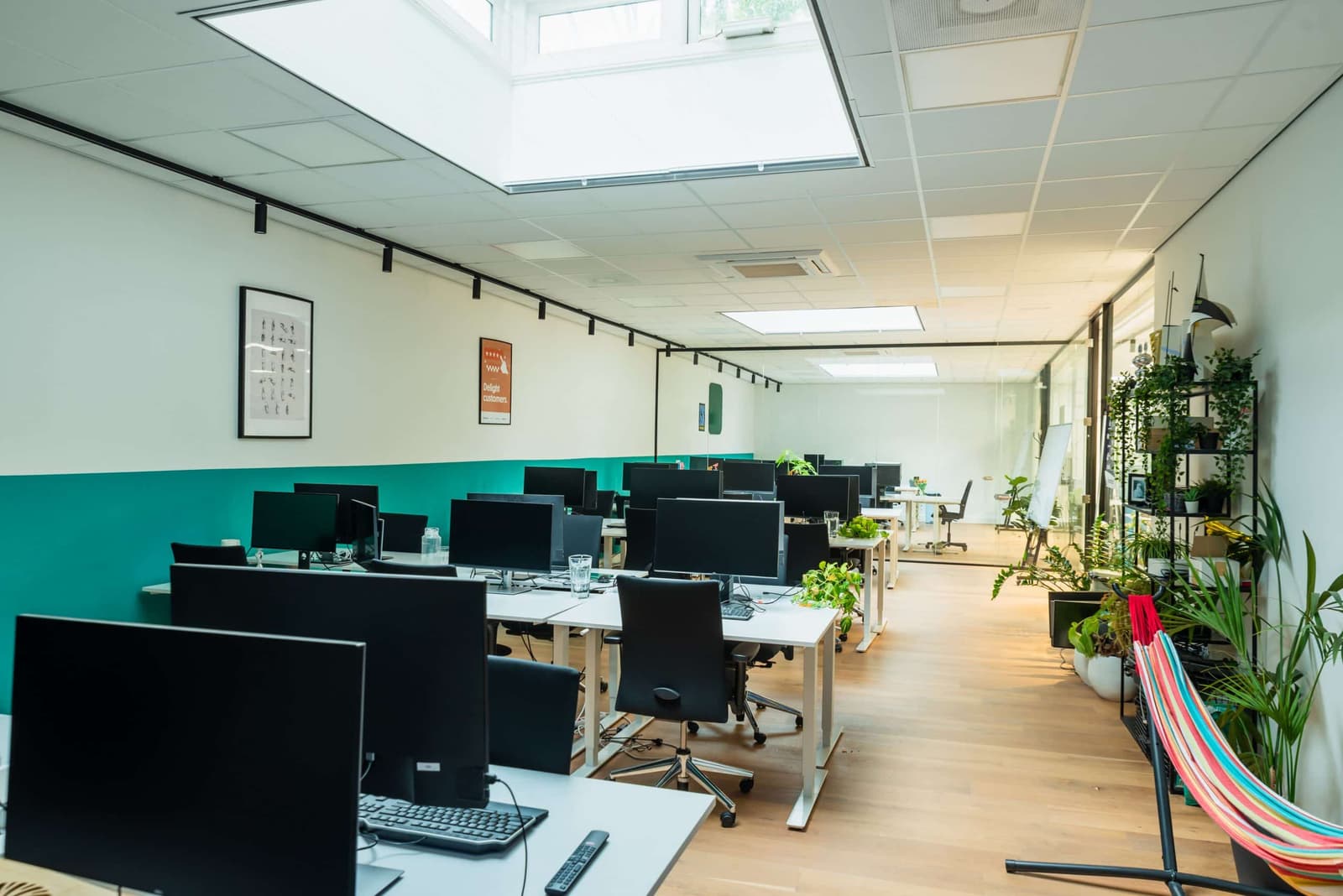
Flexible workspaces are increasingly replacing fixed desks at the office — a new phenomenon. Traditional offices with assigned desks seem more and more to be a thing of the past, and are now being transformed into flexible offices. A flexible office can also be called a flexible workspace or 'coworking space'. This refers to an office with flexible workspaces that aren't tied to any one person.
Flexible working, in a flexible office, is increasingly experienced as pleasant by workers. Flexible offices therefore emerged from a need for flexibility and dynamism, and offer various benefits that are explored further in this blog.
Features and benefits of a flexible office
- A flexible office often has various spaces such as quiet zones, meeting areas and shared communal spaces. A flexible office is also a dynamic environment, without 'fixed' desks.
- For a flexible office there are usually no fixed leases, but flexible rental terms instead.
- A flexible office can encourage making new contacts, sometimes from different industries. Hierarchies also fade away, making collaboration easier.
Cost savings and sustainability through flexible offices
More and more companies are transforming their 'traditional' office into a flexible office. We also increasingly see our customers benefit from the advantages of a flexible office in, for example, Amsterdam-Centrum, Amsterdam-Houthavens of Amsterdam-Noord.
Eliminating fixed desks can lead to more efficient use of space, allowing companies to save on rent and operational costs. Moreover, flexible offices contribute to sustainability, because they reduce the energy consumption associated with large office spaces.
Conclusion
Flexible offices are very much on the rise and are changing traditional ways of working. They offer more flexibility, easier collaboration and cost savings. It very much looks like flexible working and flexible offices are becoming a permanent part of the work landscape.